Upholstery Cleaning in London
If you live or work in the capital, you already know how quickly sofas, armchairs, dining chairs, and office seating can pick up everyday wear. Busy family homes, rented flats, period terraces, riverside apartments, and commercial premises all face the same challenge: fabrics absorb dust, body oils, drink spills, pet hair, traffic pollution, and general grime far faster than most people expect. That is why professional Upholstery Cleaning in London is more than a cosmetic service. It helps restore the look and feel of furniture, supports a cleaner indoor environment, and can extend the life of items you use every day.
Whether you are in a compact flat in Zone 1, a family house in North London, a townhouse in West London, or a busy workspace in the City, a local upholstery cleaning service needs to be practical, flexible, and careful. London properties often come with narrow staircases, restricted parking, controlled access, lift bookings, and time-sensitive schedules. A local team understands those realities and can plan the job around them, rather than treating your home or business like a generic space.
Our approach is simple: assess the fabric, identify the type of soiling, choose the right cleaning method, and carry out the work with attention to detail. The result is furniture that looks fresher, smells cleaner, and feels more comfortable to use. If you are preparing for guests, moving out, welcoming clients, or simply tired of looking at worn upholstery, contact us today to request a free quote and discuss your needs.
Why Upholstery Cleaning Matters for London Homes and Businesses

Upholstery is one of the most used surfaces in any property, yet it is often overlooked until a stain becomes impossible to ignore. Sofas and chairs collect the dust that floats through the room, while cushions absorb everyday oils from skin, food crumbs, pet dander, and airborne particles from open windows or busy streets. In London, this buildup can happen faster because of high footfall, public transport use, and the mix of indoor and outdoor pollution common in urban areas.
For households, deep cleaning upholstered furniture can make a noticeable difference to comfort and appearance. Light-coloured fabric that once looked tired may become far more presentable, and frequently used seating can regain a fresher feel. For landlords and letting agents, it is a practical way to prepare a property between tenancies without replacing furniture unnecessarily. For offices, reception spaces, hospitality venues, clinics, and retail settings, clean upholstery creates a better impression and supports a more professional environment.
Choosing a professional service also means using methods suited to the material. Not every sofa, dining chair, or ottoman should be treated the same way. Some fabrics respond well to hot water extraction, while others need low-moisture cleaning or specialist spotting. Leather upholstery may require separate care. This is where experience with different fabric types makes a real difference.
What We Clean

Professional upholstery care covers far more than a standard living room sofa. Many London customers ask for cleaning across a wide range of household and commercial seating, each with its own requirements. The aim is always to treat the material correctly, protect the structure, and improve the overall finish without causing unnecessary wear.
Typical items include:
- Fabric sofas and corner sofas
- Armchairs, recliners, and footstools
- Dining chairs and upholstered benches
- Office chairs and waiting-room seating
- Reception furniture and breakout-area seating
- Ottomans, chaise lounges, and occasional chairs
- Leather upholstery, where suitable cleaning and conditioning are required
Different properties in London tend to need different solutions. A two-bedroom flat in Hackney may need a compact, low-disruption service that fits around residents and neighbours. A townhouse in Kensington might have delicate upholstery that requires extra care. A restaurant in Shoreditch may need seating cleaned outside trading hours. A practice in Westminster or a showroom in Southwark may need a service that is fast, discreet, and efficient.
Upholstery cleaning London customers often want a service that handles these varied situations without fuss. That means arriving prepared, checking fabric labels or fibre type where available, and selecting the safest effective method for the piece in question.
How the Service Works

A professional upholstery cleaning appointment usually starts with an inspection. This step is important because not every stain, fabric, or frame can be treated in exactly the same way. A technician will typically look at the upholstery construction, colour stability, stain history, wear patterns, and any particular concerns such as pet odours or drink marks. If the furniture is in a home, they will also consider access, nearby furnishings, and flooring protection.
Once the fabric is assessed, the cleaning method is chosen. In many cases, the process includes vacuuming loose dust and debris, applying a suitable cleaning solution, gently working it into the upholstery, and removing soil with appropriate extraction or low-moisture techniques. Some items may need pre-treatment for specific marks, while delicate fabrics may require a more conservative approach. In every case, the aim is to clean thoroughly while protecting the texture, colour, and shape of the item.
After cleaning, drying time depends on the fabric, room temperature, ventilation, and how much moisture was used. London properties vary a great deal in layout and airflow. A top-floor flat with windows that open wide may dry differently from a basement apartment or a sealed office space. Good service means giving realistic advice about aftercare so you know when it is safe to use the furniture again.
Book your service now if you want the process handled by a local team that understands the practical side of working in London properties.
What Is Included in Upholstery Cleaning
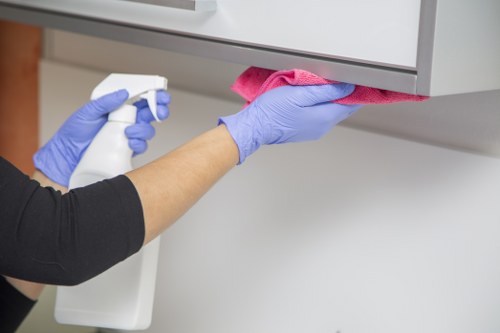
When customers enquire about upholstery care, they often want to know exactly what is included. A clear service should feel straightforward and practical, with no confusion about what the visit covers. While each booking may be tailored to the furniture and fabric type, the service commonly includes the following steps:
- Initial fabric and condition assessment
- Removal of loose dust, crumbs, and surface debris
- Pre-treatment of visible marks where appropriate
- Careful cleaning using a method suitable for the upholstery
- Attention to high-use areas such as armrests, seat bases, and headrests
- Spot treatment for common household stains
- Deodorising support where suitable for the material
- Advice on drying, ventilation, and post-clean care
For leather furniture, the process is usually different. Leather needs cleaning products that are suitable for its finish, followed by careful conditioning where appropriate to help maintain softness and appearance. Using the wrong product on leather can cause damage, so it is important to choose a service that understands the difference between fabric and leather care.
Customers in London often value the convenience of having several pieces cleaned in one appointment. If your lounge sofa, dining chairs, and occasional armchair all need attention, it may be more practical to schedule them together. This can be especially helpful for busy households, landlords preparing a furnished rental, and offices refreshing multiple seating areas at once.
Why Choose a Local London Upholstery Cleaning Company
Working with a local company offers real advantages beyond convenience. London is a city of contrasts, with large Victorian homes, new-build apartments, mansion blocks, converted warehouses, and commercial properties all needing different approaches. A local provider is more likely to understand access restrictions, parking limitations, cleaning hours, and building rules that can affect the appointment.
For example, many central areas have controlled parking zones, delivery windows, or concierge-managed entry. Some properties require stair-only access, while others have lift bookings or sensitive communal areas. In outer boroughs, homes may have larger family seating sets that take more time and care to clean. Local knowledge helps the job run smoothly and reduces avoidable delays.
There is also a practical benefit in choosing someone who works across London regularly. A team familiar with the city can plan arrival times around traffic, unloading restrictions, and neighbourhood access. That matters whether you are in Camden, Greenwich, Hammersmith, Islington, Lewisham, Richmond, Wandsworth, or elsewhere in the capital.
Contact us today if you want upholstery care that fits the way London properties really work.
Common Reasons Customers Book Upholstery Cleaning

People contact an upholstery cleaning service for many different reasons, and not all of them involve obvious damage. Sometimes furniture looks dull rather than dirty. Sometimes a room has a persistent smell that seems to linger in the fabric. Sometimes a stain has become part of daily life and the household simply wants the sofa to feel clean again. Other times, the booking is driven by a practical event such as the end of a tenancy, a special occasion, or a change in business use.
Here are some of the most common situations:
- Preparing a home for sale, letting, or new occupants
- Freshening up after pets, children, or frequent visitors
- Removing or reducing visible drink and food marks
- Improving the look of light-coloured or heavily used furniture
- Dealing with odours trapped in cushions or seams
- Refreshing office or reception seating before clients arrive
- Supporting a regular property maintenance routine
In London’s rental market, upholstered furniture can affect how a property feels the moment someone walks in. A clean sofa or chair can help a furnished flat appear better maintained and more welcoming. In commercial settings, seating is part of the customer experience. If the upholstery looks tired, it can affect how the whole space is perceived.
Residential Upholstery Cleaning Across London
Homeowners, tenants, and landlords all have different reasons for booking upholstery cleaning. Families may want to remove everyday mess and keep a busy sitting room looking presentable. Tenants may need to leave a property in good order at the end of a tenancy. Landlords may want to maintain furniture between lets and avoid unnecessary replacement. In every case, clean upholstery can make a home feel better cared for.
London homes come in many forms, and upholstery cleaning should adapt to the space. In a compact apartment, furniture may be moved carefully to access tight corners and narrow access routes. In a larger family house, the focus may be on multiple sofas, dining chairs, and occasional seating. Period properties can present extra care requirements because older rooms may have more delicate finishes, while modern apartments may have large sectional seating that needs time and careful handling.
For many residents, convenience is just as important as the result. Evening appointments, weekend availability, and an efficient setup can make a big difference. A reliable local service should work around real household routines rather than expecting the customer to disrupt their entire day.
Good reasons to arrange cleaning at home
- When furniture looks dull, faded, or patchy
- After spills have dried into the fabric
- When pets regularly use the sofa or chairs
- Before hosting family, friends, or guests
- After illness or a period of reduced use
- As part of seasonal cleaning and maintenance
Commercial Upholstery Cleaning in London
Businesses often need upholstery cleaned for both appearance and practicality. Seating in reception areas, waiting rooms, meeting spaces, restaurants, salons, hospitality venues, and offices is used by many people each day. That creates visible wear quickly, especially in high-traffic parts of the city where customers and staff move through the space constantly.
Commercial customers usually need a service that is discreet, well organised, and mindful of operating hours. Cleaning may need to happen early in the morning, after closing time, or during a quieter part of the week. London businesses also value low disruption, clear communication, and the ability to clean several items in one visit where possible. The right service should support your operations rather than interrupt them.
In commercial settings, upholstery cleaning can help maintain standards without replacing furniture too soon. That matters when budgets are tight or when seating is part of a wider interior design scheme. A clean reception sofa or well-kept dining chair can help reinforce a sense of professionalism and care.
Request a free quote if you need upholstery cleaning for your workplace, venue, or customer-facing space.
Fabric Types, Stains, and Special Care
One of the main reasons customers choose a professional service is fabric knowledge. Upholstery varies widely, from synthetic blends to natural fibres, textured weaves, delicate finishes, and leather. A cleaning method that works well on one material could be too harsh for another. That is why a careful inspection matters before any solution is applied.
Common stain and issue types include food spills, tea or coffee marks, wine, mud, pet accidents, sweat marks, dust buildup, and general darkening in commonly touched areas. Some stains respond best to immediate treatment, while others need patient pre-treatment and controlled cleaning. In many cases, older marks can be improved even if they cannot be fully removed. Honest advice is important here so expectations stay realistic.
Important note: always check any manufacturer care label where available, and never assume that a standard household product is safe for upholstery. Incorrect products can leave rings, fade colour, or damage fibres. A trained local cleaner should work with the material as it is, not as they wish it were.
Examples of care differences
- Cotton or linen blends may need careful moisture control
- Synthetic fabrics often tolerate deep cleaning well, but still need the right chemistry
- Velvet and textured fabrics can require extra handling to preserve appearance
- Leather may need specialised products and conditioning
- Delicate or antique pieces may need a lighter approach and more time
How to Prepare for Your Appointment
Good preparation helps the appointment go smoothly and can reduce the time needed on site. You do not need to do anything complicated, but a few simple steps can make a real difference, especially in London homes where space is limited and access can be tight.
Before the visit, it helps to:
- Remove loose items such as throws, cushions, and blankets
- Clear ornaments, fragile items, and clutter from around the furniture
- Ensure a parking or access arrangement is in place if needed
- Let the cleaner know about any stains, pets, or fabric concerns in advance
- Keep children and pets away from the work area during cleaning
- Allow space for equipment and drying after the work is complete
If your building has a concierge desk, loading restrictions, or shared entrance rules, it is worth mentioning this when booking. In many London apartments and offices, a little advance planning prevents unnecessary delay on the day. The same is true for basement properties, upper-floor flats, and homes with narrow stairwells.
Simple preparation often leads to a better result and a smoother experience overall.
Pricing Factors Customers Commonly Ask About
People often want to know what affects the cost of upholstery cleaning. While exact prices vary from job to job, the main factors are usually straightforward. A clear service will explain these factors before the appointment so you know what to expect.
Typical pricing factors include:
- The type and size of furniture
- The number of items to be cleaned
- The fabric type and level of soiling
- Whether stain treatment or deodorising is required
- Access conditions such as stairs, parking, or restricted entry
- Whether the work is domestic or commercial
- Any specialist care needed for leather or delicate fabric
In London, access can be a significant factor. Parking restrictions, congestion, loading bays, lift access, and building entry procedures can all influence how long a job takes. That does not mean the service becomes complicated for the customer; it simply means the provider needs to plan properly. A local company used to London conditions is better placed to do that efficiently.
When asking for a quote, it is useful to share as much detail as possible. Photos of the furniture, information about the fabric, and a short description of the problem can help the provider give a more accurate response.
Areas Covered Across London
A London upholstery cleaning service should be able to cover a broad range of neighbourhoods, because the city’s housing and business districts are spread across many boroughs. Customers often need help in central, north, south, east, and west London, as well as surrounding areas with busy residential streets and mixed commercial use.
Areas commonly covered may include:
- Central London districts and business areas
- North London neighbourhoods and family housing areas
- South London flats, terraces, and commercial premises
- East London apartments, creative spaces, and busy high streets
- West London homes, offices, and hospitality venues
- Riverside developments and modern apartment blocks
That broad coverage matters because different parts of London have different property layouts and access patterns. A customer in Brixton may need help with a large family sofa. Someone in Notting Hill may have a compact flat with tighter access. A business in Canary Wharf may require scheduled work outside office hours. A local team that regularly works across the capital is usually better prepared for these realities.
Frequently Asked Questions
How often should upholstery be cleaned?
That depends on how much the furniture is used. Busy family sofas, pet-friendly homes, and commercial seating usually need attention more often than lightly used items. Many customers choose periodic cleaning as part of routine home or workplace maintenance.
Can all stains be removed?
Not always. Some marks are fresh and respond well to treatment, while others may have set deeply into the fibres or altered the fabric colour. A professional cleaner can assess the stain and explain what improvement is realistic before work begins.
Is upholstery cleaning safe for children and pets?
That depends on the cleaning method and the products used, but a proper service will choose suitable materials and give guidance on drying and re-use. If you have children or pets in the home, mention it in advance so the right approach can be planned.
Will the fabric be wet for long?
Drying time varies. It depends on the fabric, the amount of cleaning moisture used, ventilation, room temperature, and the weather. London properties with limited airflow may need more time, so it is important to follow aftercare advice.
Can you clean upholstery in flats and high-rise buildings?
Yes, provided access and building rules are arranged. Many London bookings are in flats, apartments, and managed buildings. It helps to mention stairs, lifts, concierge access, and parking conditions when enquiring.
Do I need to move the furniture first?
Usually not completely. The cleaner will generally work around the item and shift it as needed for access. If you have small loose items nearby, clearing those away beforehand is helpful.
Is leather upholstery cleaned the same way as fabric?
No. Leather needs different products and care. If you have leather seating, ask specifically for a suitable leather cleaning and conditioning approach rather than using a standard fabric method.
Why Customers Keep Choosing Professional Upholstery Care
There is a clear difference between a quick surface wipe and a proper upholstery clean. Light maintenance can help in the short term, but built-up grime and deep-seated marks need more thorough treatment. Professional cleaning addresses the layers of dirt that regular household cleaning often misses, including debris inside seams, under cushions, and in frequently touched areas.
It also saves time and reduces guesswork. Instead of trying several products and risking damage, customers can rely on a method chosen for the fabric and the problem. That is especially useful in London, where many people are juggling work, family life, commuting, and limited living space. A well-timed service can reset a room without the cost or disruption of replacing furniture.
For many people, the biggest benefit is simply enjoying the room again. A cleaner sofa can make a lounge feel more comfortable, a cleaned armchair can improve a reading corner, and refreshed office seating can make a customer area feel more polished. Those practical improvements matter day to day.
What a good local service should feel like
- Clear communication before the visit
- Respect for your home or workplace
- Careful treatment of fabrics and finishes
- Practical advice on drying and aftercare
- Flexible planning around London access needs
Book Upholstery Cleaning in London
If your sofa, chairs, or commercial seating are looking tired, stained, or overdue for attention, a professional clean can make a real difference. London properties are busy, varied, and often space-conscious, so it helps to choose a local service that understands the city and its challenges. From residential flats and family homes to offices, restaurants, and reception areas, the right upholstery care can improve appearance, comfort, and everyday usability.
Whether you need a one-off refresh or a practical clean for multiple items, we are ready to help. Contact us today to request a free quote, ask about your fabric type, or arrange a convenient appointment. If you are ready to bring your furniture back to a cleaner, fresher standard, book your service now.
Helpful reminder before you enquire
Share the furniture type, fabric if known, approximate size, access details, and the main problem you want addressed. That makes it easier to plan the visit properly and recommend the right cleaning approach.
Local, practical, and built around real London needs
From busy households to commercial spaces, upholstery cleaning in London works best when it is flexible, careful, and tailored to the property.